


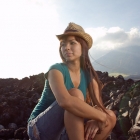
Delbert Wakinekona shows his prison tattoos on a beach near his home in
Oahu. Photo by Marco Garcia.
A bleak, sweltering
prison town in the middle of the Arizona desert is an unlikely destination for
incarcerated Hawaiians. But since the 1990s, Saguaro Correctional Facility in
Eloy, AZ, has housed more Hawaiians than any other prison in the nation -- including
Hawaii's. Delbert Wakinekona was one of the very first Hawaiian prisoners
transferred out of state. A notorious escape artist, he was transferred to the
mainland in the 1970s and over a period of 40 years, he made his way through a
series of prisons, eventually landing in Eloy.
The stark change in
landscape, from the islands to the desert, is just part of the shock for
prisoners like him. Time and again, studies have shown that contact with
friends and family helps to lower recidivism rates, but for many of these
Hawaiian prisoners, visitations are an impossibility; a $2,000 trip to a desert
penitentiary is a hard financial pill to swallow for most prisoners’ families.
Prison abuse is another issue: in Arizona, allegations that guards have banged
prisoners' heads on table tops and forced oral sex upon them have resulted in
probation. One 2012 lawsuit brought by five Saguaro prisoners alleges that a
guard threatened an inmate by saying, "We will continue to beat you, and
the only way to stop is to commit suicide." This year, the families of two
men killed by fellow prisoners at the facility have filed separate lawsuits
citing similar problems, such as "negligence, recklessness, and a flagrant
failure to protect."
Hyphen needs YOUR
help to bring this story to light in the upcoming November 2012 issue of
Hyphen.
As we have done in the past, we're funding this story through Spot.Us, a platform for crowdfunding journalism
projects. We've used it before to successfully fund feature stories on discrimination against Filipina nurses in San Francisco,
Asian American moms embracing ancicent post-birth
traditions, and undocumented Asian American activists.
Now, we have about
one month to raise $1,000, which will help support the
reporting of this project (led by our fantastic writer Toshio
Meronek), the on-location photographs that will run with the story (taken by
photojournalist Marco Garcia), and multimedia web extras (courtesy of Hyphen's
magical, web development elves).
You can support this
project by visiting our pitch on Spot.Us and clicking
"Fund This." We welcome donations in any amount and
have assembled some great thank you gifts for our donors:
- Donate $10.00 or more and receive a thank you card from Hyphen
- Donate $25.00 or more and receive a 5x7 photographic print from the feature story
- Donate $50.00 or more and receive 8x7 and 5x7 photographic prints from the feature story.
- Donate $100.00 or more and receive a 4-issue subscription to Hyphen
- Donate $200.00 or more and receive a t-shirt plys an additional 4-issue subscription to Hyphen
We can't do it without you, so please take a moment to donate, and share our pitch on Facebook or other social media to increase the chances of others donating. As a volunteer-run, nonprofit magazine, we rely on community support to bring these important stories to light. Thanks in advance for your help!

Comments